
Seals and gaskets
Frequently asked questions
How do I tell when to use an oil seal and when to use an O-ring?
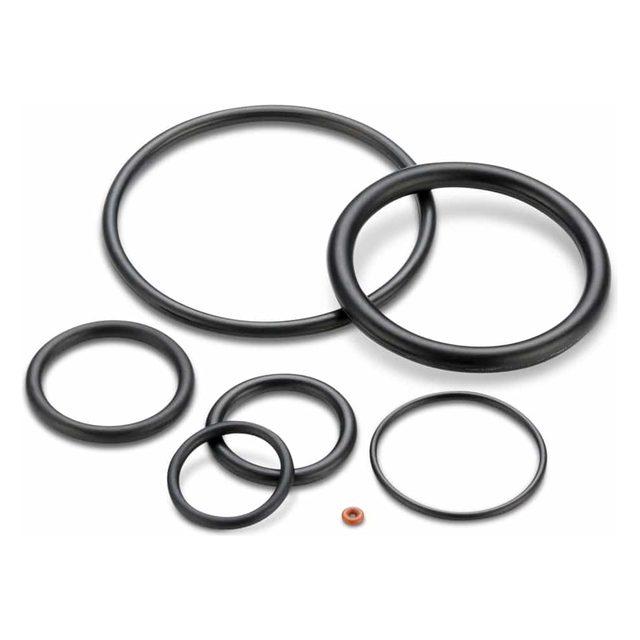
An oil seal seals a rotating shaft: its lip rides on the running shaft surface and keeps oil inside a bearing housing or gearbox. An O-ring mainly seals static joints or short reciprocating strokes, sitting in a groove and squeezed between two surfaces. Fitting an O-ring on a fast rotating shaft generates heat and wears it out very quickly.
For a static flange, should I use a sheet gasket or gland packing?
Sheet gaskets are for bolted flange joints where the two faces do not move relative to each other. Gland packing goes in a stuffing box around a pump shaft or valve stem, where the shaft rotates or slides and the packing is retightened as it wears. The two are not interchangeable.
A hydraulic cylinder is leaking. What should I buy?
A cylinder usually has a piston seal, rod seal, wiper, guide rings and several static O-rings. Replacing them one by one makes it easy to miss a part, so a complete cylinder seal kit for the model is usually the better choice, or individual seals from the hydraulic and pneumatic group if the groove sizes are known.
What is a quick way to choose rubber material by medium?
NBR suits mineral oil and grease at roughly -30 to 100 °C. FKM handles hot oil and many chemicals up to about 200 °C. EPDM suits hot water, steam and glycol brake fluid but fails quickly in mineral oil; silicone (VMQ) tolerates heat well but is mechanically weak and best kept to static sealing.
How should spare seals and gaskets be stored?
Rubber ages quickly under sunlight, ozone and heat, so keep seals in closed bags in a dark, dry place below about 25 °C and away from electric motors and welders. Do not hang seals on nails or tie them with string, because prolonged distortion leaves a permanent set. Issue stock first in, first out and write the receiving date on the packaging.
When I remove a failed seal, what should I look at to find the cause?
A hardened lip with fine cracking usually points to overheating or ageing. A swollen, soft seal indicates the material is not compatible with the medium, while a lip nibbled away in pieces shows extrusion into the clearance gap under high pressure. Wear concentrated on one side means shaft runout or misaligned fitting, which must be corrected before a new seal goes in.
